
What is Website Development and How Does It Work?
In today’s digital world, almost every business, organization, and personal brand needs a website. From small startups to multinational companies, websites have become one of the most important tools for communication, marketing, and online growth.
But many people still ask an important question:
What is website development and how does it work?
Website development is the process of building, designing, and maintaining websites that run on the internet. It involves a combination of programming, design, content creation, and server management to create a fully functional online platform.
A website can be as simple as a basic informational page or as complex as an e-commerce store, online learning platform, or enterprise management system.
In this guide, we will explain everything you need to know about website development, including the development process, popular platforms like WordPress, typical costs, and the best development agencies.
What is Website Development?
Website development refers to the process of creating websites and web applications that operate on the internet.
It includes multiple technical and creative elements such as:
• Website design
• Coding and programming
• Database management
• Server configuration
• Content management systems (CMS)
• Website optimization and maintenance
Developers use programming languages and frameworks to build websites that are functional, responsive, and accessible across devices.
Modern website development focuses on creating websites that are:
Fast loading
Mobile responsive
Secure
SEO friendly
Easy to manage
These elements ensure that websites provide a smooth experience for both users and search engines.

Types of Website Development
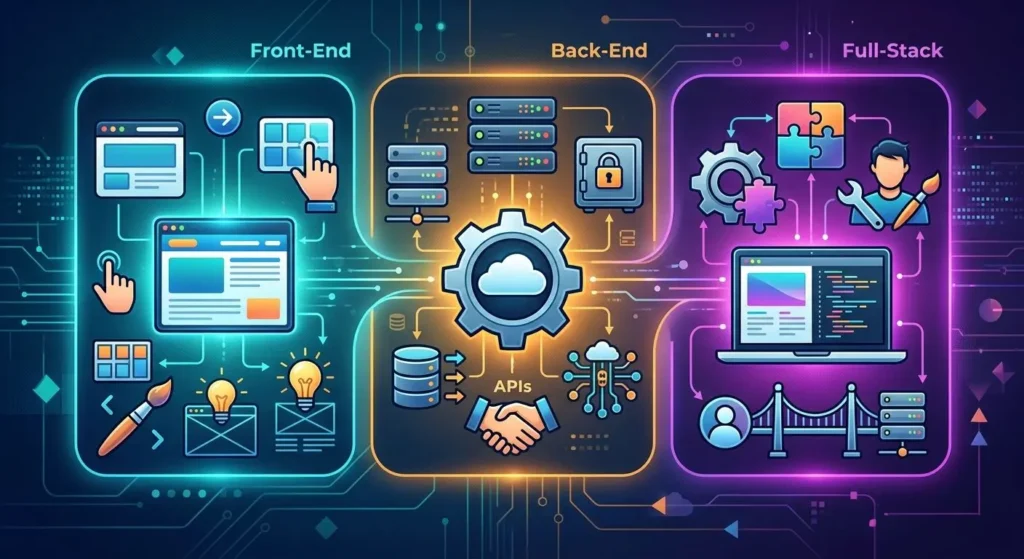
Website development is generally divided into three main categories.
Front-end development focuses on the visual and interactive parts of a website that users see and interact with.
This includes:
Layout and structure
Navigation menus
Images and animations
Forms and buttons
Responsive design
Front-end developers typically use technologies such as:
HTML
CSS
JavaScript
These tools help create the interface that users interact with when visiting a website.
Back-end development deals with the server side of a website.
This is the part that processes data and ensures that everything functions properly behind the scenes.
Back-end development includes:
Server configuration
Databases
Application logic
Security management
Data processing
Common back-end technologies include:
PHP
Python
Node.js
MySQL databases
For example, when a user submits a form on a website, the back-end processes the data and stores it in a database.
3. Full-Stack Development
Full-stack developers work on both the front-end and back-end of a website.
They have expertise in both visual design and server-side programming, allowing them to build complete websites or web applications.
How Does Website Development Work?
Website development follows a structured process that ensures the final product meets the goals of the business and provides a good user experience.
1. Planning and Research
The first stage of website development is planning.
During this phase, developers and clients define:
Business goals
Target audience
Website structure
Features and functionality
Design requirements
This step helps create a roadmap for the entire project.
2. Website Design
Once planning is complete, designers create the visual layout of the website.
This includes:
Color schemes
Typography
Page layouts
User interface design
Design tools such as Figma or Adobe XD are often used to create mockups before development begins.
3. Development and Coding
During the development stage, developers start building the website using programming languages or website platforms.
This is where the website becomes functional.
Developers create:
Web pages
Navigation systems
Contact forms
Interactive elements
Database connections
4. Testing and Optimization
Before launching the website, developers test it to ensure everything works correctly.
Testing includes:
Speed optimization
Mobile responsiveness
Browser compatibility
Security checks
Bug fixing
This step ensures the website performs well and provides a smooth user experience.
5. Website Launch
After testing, the website is deployed on a hosting server and made accessible on the internet.
Users can then visit the website using a domain name such as:
example.com
6. Maintenance and Updates
Website development does not end after launch.
Regular maintenance is required to:
Update plugins or software
Fix security vulnerabilities
Improve performance
Update content
Businesses that maintain their websites regularly benefit from better security and improved search engine rankings.
Website Development on WordPress
One of the most popular platforms for website development is WordPress.
WordPress powers more than 40% of websites on the internet, making it the most widely used content management system.
According to W3Techs:
https://w3techs.com/technologies/details/cm-wordpress
WordPress is popular because it offers flexibility, scalability, and ease of use.
Why Businesses Choose WordPress
WordPress is widely used for website development because it provides several advantages.
Easy Content Management
WordPress allows users to update website content without coding knowledge.
Businesses can easily manage:
Pages
Blogs
Images
Products
Thousands of Plugins
WordPress offers thousands of plugins that extend website functionality.
Popular plugins include:
SEO tools
Security plugins
E-commerce features
Contact forms
Performance optimization
SEO-Friendly Structure
WordPress websites can be optimized easily for search engines using plugins such as:
Rank Math
All in One SEO
Yoast SEO
These tools help improve website visibility in search results.
Customizable Design
WordPress supports thousands of themes and page builders that allow developers to create unique website designs.
Popular page builders include:
Elementor
Divi
Gutenberg
Scalable for Business Growth
WordPress can support websites of all sizes, from small business websites to large enterprise platforms.
What are the Best Platforms for Website Development?
There are many platforms available for website development, each designed for different types of projects.
Best for:
Business websites
Blogs
E-commerce stores
Service companies
WordPress is flexible, scalable, and highly customizable.
Best for:
E-commerce businesses
Online stores
Retail brands
Shopify focuses primarily on online selling and product management.
Best for:
Beginners
Small websites
Personal projects
Wix offers a drag-and-drop builder but provides less customization compared to WordPress.
Best for:
Designers
Creative agencies
Advanced website design
Webflow offers strong design capabilities but requires technical knowledge.
What are the Key Differences Between Website Builder Platforms?
Different platforms vary in terms of customization, flexibility, and scalability.
Customization
WordPress provides extensive customization through plugins and themes, while builders like Wix offer limited design control.
Ease of Use
Website builders such as Wix are easier for beginners, but they often limit advanced features.
WordPress offers more flexibility but may require basic technical knowledge.
Scalability
WordPress and Webflow support larger websites and complex features, while simpler builders are better suited for smaller projects.
Ownership and Control
With WordPress, businesses have full control over their website and hosting.
Some website builders host the website themselves, limiting flexibility.
What is the Typical Cost Range for a Business Website Development Project?
Website development costs can vary depending on the complexity of the project, design requirements, and features.
Below is an estimated cost range.
Basic Business Website
Cost in Pakistan:
PKR 50,000 – PKR 150,000
Cost in USD:
$180 – $550
Includes:
Basic design
4–5 pages
Contact form
Mobile responsive layout
Professional Business Website
Cost in Pakistan:
PKR 150,000 – PKR 400,000
Cost in USD:
$550 – $1,400
Includes:
Custom design
SEO optimization
Speed optimization
Content management system
E-commerce Website
Cost in Pakistan:
PKR 300,000 – PKR 1,000,000+
Cost in USD:
$1,000 – $3,500+
Includes:
Product management
Payment integration
Order tracking
Inventory systems
Costs may vary depending on the complexity and customization required.
Which Companies Offer Website Development Services in Pakistan?
Pakistan has a growing technology industry with many agencies offering website development services.
Some well-known companies include:
WebInfinites
WebInfinites provides modern website development services including WordPress development, SEO optimization, and digital marketing solutions for businesses.
Systems Limited
One of the largest IT companies in Pakistan offering enterprise-level software and web solutions.
Arbisoft
Arbisoft is known for providing software development and web engineering services globally.
Techlogix
Techlogix focuses on enterprise technology solutions and digital transformation services.
Conclusion
Website development is the foundation of a strong online presence. It involves designing, building, and maintaining websites that allow businesses to communicate with customers, showcase services, and generate leads.
Platforms like WordPress have made website development more accessible and flexible for businesses of all sizes.
Whether you are starting a small business website or building a complex online platform, investing in professional website development can significantly improve your digital growth and market visibility.
By understanding the development process, choosing the right platform, and working with reliable developers, businesses can create powerful websites that support long-term success.
Frequently Asked Questions
What is the typical cost range for a business website development project?
Which companies offer website development services in Pakistan?
Where can I find reliable web development agencies for small businesses?
What are the best platforms for website development?
What are the key differences between various website builder platforms?
Want to know what’s holding your site back?
Explore our approach to B2B Engineering Website Design or get in touch for a strategic website review.
